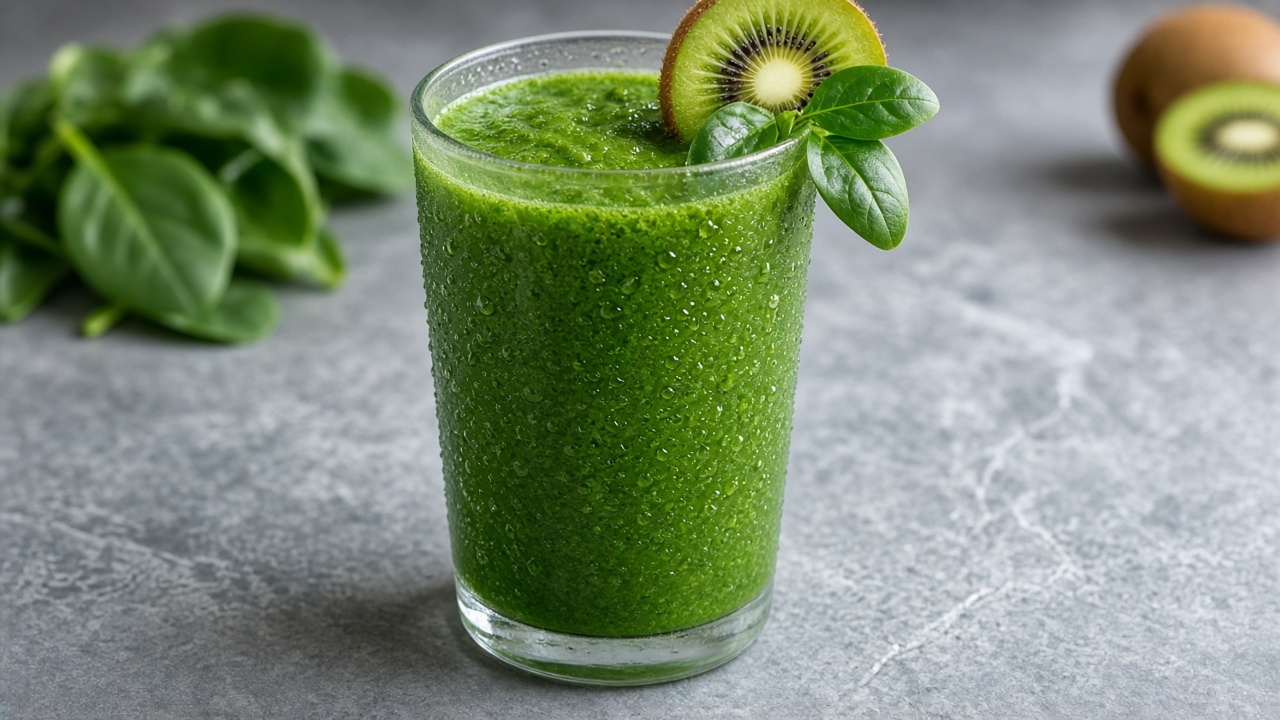
Spinach, Kale, and the Numbers Inside a Green Smoothie
A green smoothie is a drink with leaves in it. The useful question is not whether the color does something mystical. It is how much leaf you added, which nutrients that weight of leaf contains, and whether a medicine you take cares about vitamin K.
The figures below come from USDA FoodData Central entries for raw spinach (FDC 168462) and raw kale (FDC 168421), the FDA Daily Value table on the Nutrition Facts label, and the NIH Office of Dietary Supplements consumer fact sheet on vitamin K. They describe food composition. They are not a prediction of what a single glass will do for any one person.
A kitchen cup of spinach is lighter than it looks
FoodData Central lists one cup of raw spinach at 30 grams. That is a modest pile of leaves, not a packed brick. Per 100 grams, the same entry lists 23 kilocalories, 2.2 grams of dietary fiber, 2.86 grams of protein, 99 milligrams of calcium, 2.71 milligrams of iron, 558 milligrams of potassium, 28.1 milligrams of vitamin C, 482.9 micrograms of vitamin K (phylloquinone), and 194 micrograms of folate.
Scale those per-100-gram values to 30 grams and a cup of raw spinach is about 7 kilocalories, 0.7 grams of fiber, 0.9 grams of protein, 30 milligrams of calcium, 0.8 milligrams of iron, 167 milligrams of potassium, 8 milligrams of vitamin C, 145 micrograms of vitamin K, and 58 micrograms of folate.
The FDA uses 120 micrograms as the Daily Value for vitamin K. A single cup of raw spinach, at about 145 micrograms, is above that Daily Value. The agency also says that 20% of the Daily Value or more in a serving is a high amount, and 5% or less is low. On vitamin K, that cup is high. On iron, 0.8 milligrams is about 4% of the 18 milligram Daily Value, which sits at the low end of the same guide. Spinach has a folk reputation as an iron food. The measured cup is still a small share of the iron Daily Value.
Folate on this spinach entry is 194 micrograms per 100 grams, so about 58 micrograms in the cup. The FDA Daily Value for folate is 400 micrograms DFE. A cup of raw spinach is a real contribution and nowhere near a whole day's label target. People who are pregnant, or who could become pregnant, should ask their own clinician how much folic acid they need from supplements and fortified food. A smoothie page cannot set that dose.
Kale is not spinach with a different name
FoodData Central lists one cup of raw kale at 21 grams. Per 100 grams, kale (FDC 168421) lists 35 kilocalories, 4.1 grams of fiber, 2.92 grams of protein, 254 milligrams of calcium, 1.6 milligrams of iron, 348 milligrams of potassium, 93.4 milligrams of vitamin C, and 389.6 micrograms of vitamin K.
A 21-gram cup is about 7 kilocalories, 0.9 grams of fiber, 0.6 grams of protein, 53 milligrams of calcium, 0.3 milligrams of iron, 73 milligrams of potassium, 20 milligrams of vitamin C, and 82 micrograms of vitamin K.
Put the two cups next to each other. They are similar in calories and both are high in vitamin K relative to the 120 microgram Daily Value (the kale cup is about 68% of that Daily Value; the spinach cup is over 100%). Kale's cup delivers more vitamin C and more calcium. Spinach's cup delivers more folate and more iron. Neither cup is a large fiber serving. The FDA Daily Value for dietary fiber is 28 grams. A cup of either leaf is under 1 gram.
If you want the drink to carry more fiber, the leaves will not do it alone. Fruit, oats, or seeds have to come along, and those additions change the carbohydrate and calorie totals. That trade is arithmetic, not a moral failing of kale.
Vitamin K and warfarin
The NIH consumer fact sheet on vitamin K says the nutrient is important for blood clotting and for bones. Adult men are listed at 120 micrograms a day and adult women at 90 micrograms. Green leafy vegetables, including spinach and kale, are named as food sources. The same page says vitamin K deficiency is uncommon in the United States.
It also describes a serious interaction with the blood thinner warfarin (Coumadin). People who take warfarin are advised to keep vitamin K intake from food about the same from day to day. The fact sheet says a sudden drop can be tied to dangerous bleeding and a sudden rise can be tied to blood clots. A spinach-heavy week followed by a week with no greens is exactly the kind of swing that page is warning about.
This is not a reason for everyone to avoid green smoothies. It is a reason for anyone on warfarin to ask the clinician who manages that medicine before making leafy drinks a new daily habit, and to keep the portion steady if they are told to continue. Other medicines are discussed on that NIH page too, including some antibiotics and bile acid sequestrants. Bring the actual bottle, not a blog summary, to the pharmacist.
Vitamin C in raw leaves
The NIH vitamin C consumer fact sheet lists 90 milligrams a day for adult men and 75 milligrams for adult women, with an extra 35 milligrams for people who smoke. It says fruits and vegetables are the main food sources, and that prolonged storage and cooking can lower the vitamin C in food. A raw kale smoothie skips the cooking step. It does not skip storage: leaves that sat in the refrigerator for many days are not the same as leaves blended the day they were purchased, even though this page does not have a lab number for your particular bunch.
A cup of raw kale, at about 20 milligrams of vitamin C, is a meaningful slice of the 75 to 90 milligram daily amount and not the whole amount. The NIH page also says vitamin C improves the absorption of iron from plant foods. A glass that contains both kale and spinach therefore contains some vitamin C and some iron at the same time. That is a composition fact. It is not a measured absorption study of this recipe.
The adult upper limit on that fact sheet is 2,000 milligrams a day from all sources. Food amounts in a smoothie are far below that. High-dose vitamin C supplements are a different product, and the fact sheet lists diarrhea, nausea, and stomach cramps among the effects of too much.
Wash the leaves before they hit the jar
The FDA page "Selecting and Serving Produce Safely" is the handling guide that matches a home blender.
Wash hands for at least 20 seconds with soap and warm water before and after preparation. Rinse all produce under running water, including items you plan to peel, so soil on the surface is not dragged into the flesh by a knife. Do not wash produce with soap, detergent, or a commercial produce wash. The FDA says produce is porous, those products can be absorbed, and the agency does not recommend them. Scrub firm items such as cucumbers with a clean produce brush. Dry with a clean cloth or paper towel. Washing can lower bacteria on the surface. It does not erase them.
Choose leaves that are not bruised or slimy. Bag produce separately from raw meat, poultry, and seafood. Keep perishable items such as lettuce and herbs in a refrigerator at 40°F or below. Bagged, pre-washed greens can be used without another rinse when the package says they are ready to eat. If you do rinse them, keep them off dirty boards and knives.
Cut away damaged spots. Throw away produce that looks rotten. People who are more vulnerable to foodborne illness, including children, older adults, pregnant women, and people with weakened immune systems, should follow the FDA's extra guidance for those groups. If you suspect foodborne illness, contact a healthcare provider.
Building one illustrative glass
The following jar is an illustration, not a meal prescription. Weights are the USDA cup and banana portions already cited.
- 30 grams raw spinach (1 cup)
- 21 grams raw kale (1 cup)
- 136 grams banana, the USDA "large" portion (8 to 8-7/8 inches)
- 262 grams unsweetened shelf-stable almond milk, the USDA cup for FDC 174832
Banana (FDC 173944) is 89 kilocalories, 22.84 grams of carbohydrate, 2.6 grams of fiber, and 358 milligrams of potassium per 100 grams. The 136-gram large banana is about 121 kilocalories, 31 grams of carbohydrate, 3.5 grams of fiber, and 487 milligrams of potassium.
Unsweetened shelf-stable almond milk (FDC 174832) is 15 kilocalories, 0.4 grams of protein, 1.31 grams of carbohydrate, and 184 milligrams of calcium per 100 grams. The 262-gram cup is about 39 kilocalories, 1 gram of protein, 3.4 grams of carbohydrate, and 482 milligrams of calcium. That calcium figure belongs to the beverage as analyzed. Many almond milks are fortified. Read the carton you actually buy. A different brand can sit far from 184 milligrams per 100 grams.
Add the pieces: leaves about 14 kilocalories, banana about 121, almond milk about 39. The illustrative glass is roughly 175 kilocalories before anything else goes in, with about 35 grams of carbohydrate, most of it from the banana. Vitamin K is dominated by the leaves, on the order of 145 plus 82 micrograms. Anyone keeping vitamin K steady for warfarin should count that glass as a large vitamin K day, not as a free extra.
Blend liquid and leaves first if the flecks bother you, then add the banana. That is a texture step. It does not change the USDA totals.
What these pages of data cannot say
FoodData Central does not know your bunch, your blender, or your blood work. NIH fact sheets are general. They are not an order to drink greens, and they are not an order to stop. A registered dietitian or the clinician who already knows your medicines is the right person for a personal plan, especially if you take warfarin, are pregnant, or have been told to limit potassium or vitamin K.
Where the figures come from
- USDA FoodData Central, spinach, raw, FDC 168462, including the 30-gram cup.
- USDA FoodData Central, kale, raw, FDC 168421, including the 21-gram cup.
- USDA FoodData Central, bananas, raw, FDC 173944, large fruit 136 grams.
- USDA FoodData Central, unsweetened shelf-stable almond milk, FDC 174832, cup 262 grams.
- U.S. FDA, "Daily Value on the Nutrition and Supplement Facts Labels," Daily Values for vitamin K (120 mcg), folate (400 mcg DFE), iron (18 mg), fiber (28 g), and calcium (1300 mg), and the 5% / 20% Daily Value guide.
- NIH Office of Dietary Supplements, Vitamin K consumer fact sheet (updated March 22, 2021), including adult amounts and the warfarin interaction.
- NIH Office of Dietary Supplements, Vitamin C consumer fact sheet (updated March 22, 2021), including adult amounts and the note on storage and cooking.
- U.S. FDA, "Selecting and Serving Produce Safely," washing, refrigerator temperature, and soap warning.
Free PDF
Free recipe notes: 8 fruit smoothies
A short sampler of fruit smoothie recipes, plus kitchen notes on thickness, greens and prep.
You'll also get occasional recipe emails. Unsubscribe any time. Privacy Policy.