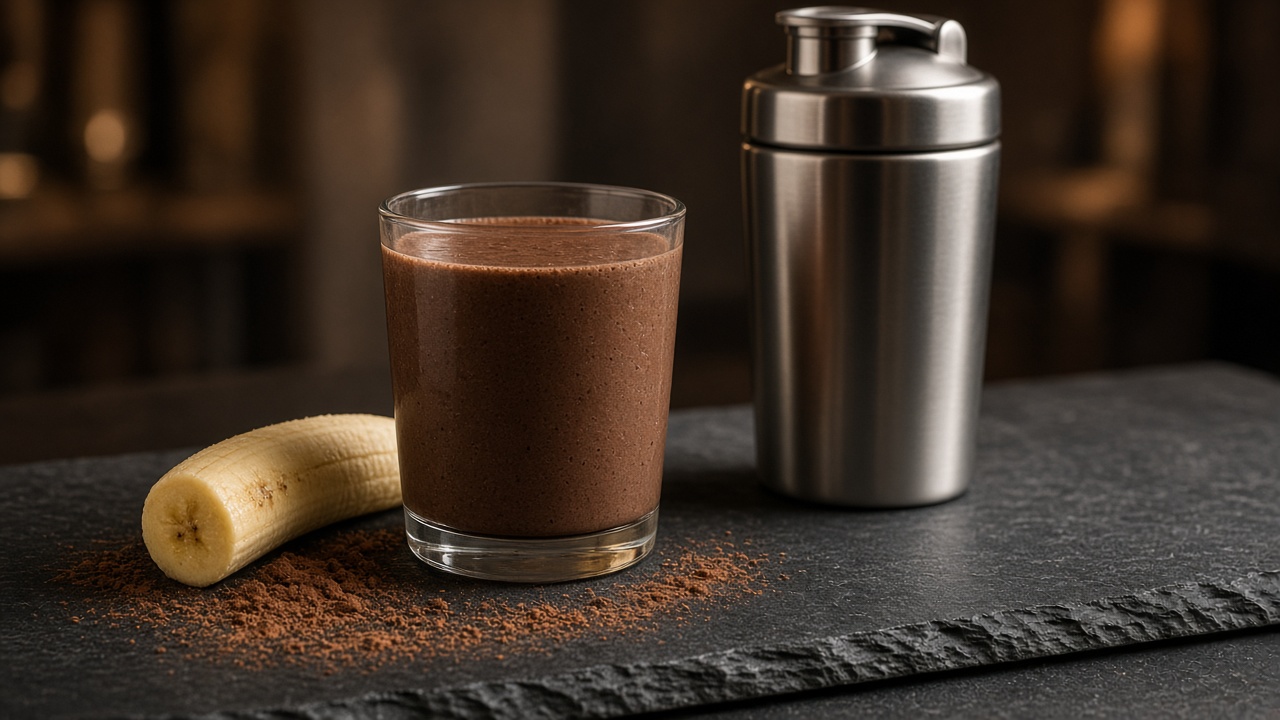
Smoothies After Exercise: Protein, Carbohydrate, and a Glass You Can Weigh
After a workout, some people want a drink they can finish quickly. A smoothie can be that drink. It does not replace sleep, the rest of the day's meals, or a plan from a sports dietitian. This page shows what is in three specific glasses, using USDA weights, so you can see the protein and carbohydrate instead of trusting a flavor name on a bottle.
The FDA Daily Value for protein is 50 grams a day. The Daily Value for total carbohydrate is 275 grams. Those are label benchmarks for a general diet, not a target written for your body or your sport. Athletes with medical conditions, and anyone who has been told to limit protein or potassium, should check portions with their own clinician.
Drink 1: a short session, yogurt and berries
Use this sketch after an easy workout when you are also going to eat a normal meal within a few hours. It is illustrative.
- 170 grams plain nonfat Greek yogurt. FoodData Central lists a 170-gram portion for "Yogurt, Greek, plain, nonfat" (FDC 330137). Per 100 grams that entry is 61 kilocalories, 10.3 grams of protein, and 3.64 grams of carbohydrate. The 170-gram portion is about 104 kilocalories, 17.5 grams of protein, and 6.2 grams of carbohydrate.
- 148 grams raw blueberries, one cup (FDC 171711). Per 100 grams: 57 kilocalories, 0.74 grams of protein, 14.49 grams of carbohydrate, 2.4 grams of fiber, 9.7 milligrams of vitamin C. The cup is about 84 kilocalories, 1 gram of protein, 21 grams of carbohydrate, 3.6 grams of fiber, and 14 milligrams of vitamin C.
- 122 grams of 2% milk, half of the 244-gram cup on FDC 171267. Per 100 grams that milk is 50 kilocalories, 3.3 grams of protein, 4.8 grams of carbohydrate, and 120 milligrams of calcium. Half a cup is about 61 kilocalories, 4 grams of protein, 5.9 grams of carbohydrate, and 146 milligrams of calcium.
Add them: about 250 kilocalories, about 23 grams of protein, and about 33 grams of carbohydrate. Twenty-three grams of protein is just under half of the 50-gram Daily Value. Thirty-three grams of carbohydrate is about 12% of the 275-gram Daily Value. Vitamin C from the blueberries is modest next to the NIH adult amounts of 75 milligrams for women and 90 milligrams for men.
Plain yogurt is tart. If you sweeten it, measure the sweetener. A USDA tablespoon of honey (21 grams, FDC 169640) is about 64 kilocalories and about 17 grams of sugars (82.12 grams of sugars per 100 grams). That spoon nearly doubles the carbohydrate in this glass. You can leave it out.
Drink 2: a long session, more banana and oats
Longer efforts use more carbohydrate. This second glass is still an illustration. It is larger on purpose.
- 244 grams 2% milk, the full USDA cup (FDC 171267): about 122 kilocalories, 8.1 grams of protein, 11.7 grams of carbohydrate, and 293 milligrams of calcium.
- 136 grams large banana (FDC 173944): about 121 kilocalories, 1.5 grams of protein, 31 grams of carbohydrate, 3.5 grams of fiber, and 487 milligrams of potassium.
- 40 grams dry rolled oats, weighed, not scooped from memory. FDC 173904, "Cereals, oats, regular and quick, not fortified, dry," is 379 kilocalories, 13.15 grams of protein, 67.7 grams of carbohydrate, and 10.1 grams of fiber per 100 grams. Forty grams is about 152 kilocalories, 5.3 grams of protein, 27 grams of carbohydrate, and 4 grams of fiber.
Total: about 395 kilocalories, about 15 grams of protein, and about 70 grams of carbohydrate. The protein share of the 50-gram Daily Value is smaller than Drink 1. The carbohydrate share is larger. That is the point of separating the two sketches. A berry-and-yogurt glass and an oat-and-banana glass are not interchangeable just because both are cold and purple-brown.
Blend the oats with the milk for a longer count if the texture is gritty. The nutrients do not care. Your spoon does.
Drink 3: no dairy, tofu and peanut butter
For a dairy-free option, use soft tofu and soy or the peanut butter you already tolerate.
- 124 grams soft tofu, half of the 248-gram cup of 1/2-inch cubes on FDC 172449 ("Tofu, soft, prepared with calcium sulfate and magnesium chloride"). Per 100 grams: 61 kilocalories and 7.17 grams of protein. Half the cup-of-cubes is about 76 kilocalories and 8.9 grams of protein.
- 32 grams smooth peanut butter without salt (FDC 172470): about 191 kilocalories, 7 grams of protein, 7 grams of carbohydrate, and 16 grams of fat.
- 136 grams large banana: about 121 kilocalories and 31 grams of carbohydrate, as above.
- 240 grams water or ice. Water adds no protein and no carbohydrate. It changes texture only.
Total from the foods: about 388 kilocalories, about 17 grams of protein, and about 38 grams of carbohydrate, plus a little carbohydrate in the tofu (1.18 grams per 100 grams, so roughly 1.5 grams in this portion). Skip the peanut butter if you have a peanut allergy, and do not "just use almond butter" without reading that jar. A different nut butter is a different USDA entry and a different allergen.
Fluid is part of the drink, and often not enough
A smoothie contributes water. Drink 1 includes about 122 grams of milk plus the water inside yogurt and fruit. That is not a full plan for a hot, sweaty session. Thirst, urine color, and how you feel are rough home cues, not a medical test. If you are cramping, dizzy, or confused after exercise, stop and get medical help. Do not try to fix that with a thicker smoothie.
Coconut water is one salty-sweet option people reach for. Unsweetened ready-to-drink coconut water (FDC 174831) is 18 kilocalories, 4.24 grams of carbohydrate, and 165 milligrams of potassium per 100 grams. A 245-gram cup is about 44 kilocalories, 10 grams of carbohydrate, and 404 milligrams of potassium. It is a beverage with potassium and some sugar, not a medicine.
Protein powder is a label, not a USDA row
Many post-exercise recipes start with a scoop of powder. Dietary supplements are not approved by the FDA the way drugs are before they are sold. The National Center for Complementary and Integrative Health states that difference directly: unlike drugs, dietary supplements are not approved by the FDA before they reach the public, and the manufacturer is responsible for safety and labeling. A scoop's protein grams are whatever the Supplement Facts panel says, and that panel can be wrong. If you use powder, keep the package. If you would rather not, Drinks 1 through 3 do not need it.
Timing without a magic window
Eat when you can actually eat. Some people are hungry immediately. Some people are not, and forcing a large fatty drink on a nauseated stomach helps no one. Drink 3 has about 16 grams of fat from the peanut butter portion alone, which many people find slower to finish right after a hard effort. Drink 1 is lower in fat because the yogurt entry is nonfat and the berries are low in fat (0.33 grams per 100 grams). Pick the one you will drink.
There is no number on this page for a required minute-count after the last rep. Individual coaching, medical conditions, and what you ate before the session all change that decision.
A few mismatches to avoid
- Using a fruit-only glass after a strength session and calling it a protein drink. A cup of blueberries has about 1 gram of protein.
- Copying a bottled smoothie's marketing when the bottle has little protein and a long added-sugar line. The FDA Daily Value for added sugars is 50 grams. Honey and sweetened yogurts contribute to that line. Plain fruit has sugars too, and they still count as carbohydrate.
- Pouring a 700-kilocalorie glass after a 20-minute walk because a recipe said "post workout." Match the size to the session and to the rest of the day.
- Ignoring an allergy. Milk, soy, and peanut show up in these sketches on purpose so you can see them and skip the one that does not fit.
When to get a person, not a paragraph
Kidney disease, disordered eating, a nutrition plan you already follow with a clinician, and pregnancy are all reasons to take smoothie recipes to a professional before using them as a daily training habit. This page never sets a protein gram target per pound of body weight, because that target depends on the person.
Young people who play sports generally do better with regular meals. A smoothie can be one of those foods. It should not be the only food.
Sources for the three glasses
- USDA FoodData Central: FDC 330137 Greek yogurt; FDC 171711 blueberries; FDC 171267 2% milk; FDC 173944 bananas; FDC 173904 dry oats; FDC 172449 soft tofu; FDC 172470 peanut butter; FDC 169640 honey; FDC 174831 coconut water.
- U.S. FDA Daily Values: protein 50 grams, total carbohydrate 275 grams, added sugars 50 grams, calcium 1300 milligrams.
- NIH Office of Dietary Supplements, Vitamin C consumer fact sheet, adult recommended amounts.
- NCCIH, "Turmeric: Usefulness and Safety" (April 2025), section on federal regulation stating that dietary supplements are not FDA-approved before sale the way drugs are.
Free PDF
Free recipe notes: 8 fruit smoothies
A short sampler of fruit smoothie recipes, plus kitchen notes on thickness, greens and prep.
You'll also get occasional recipe emails. Unsubscribe any time. Privacy Policy.