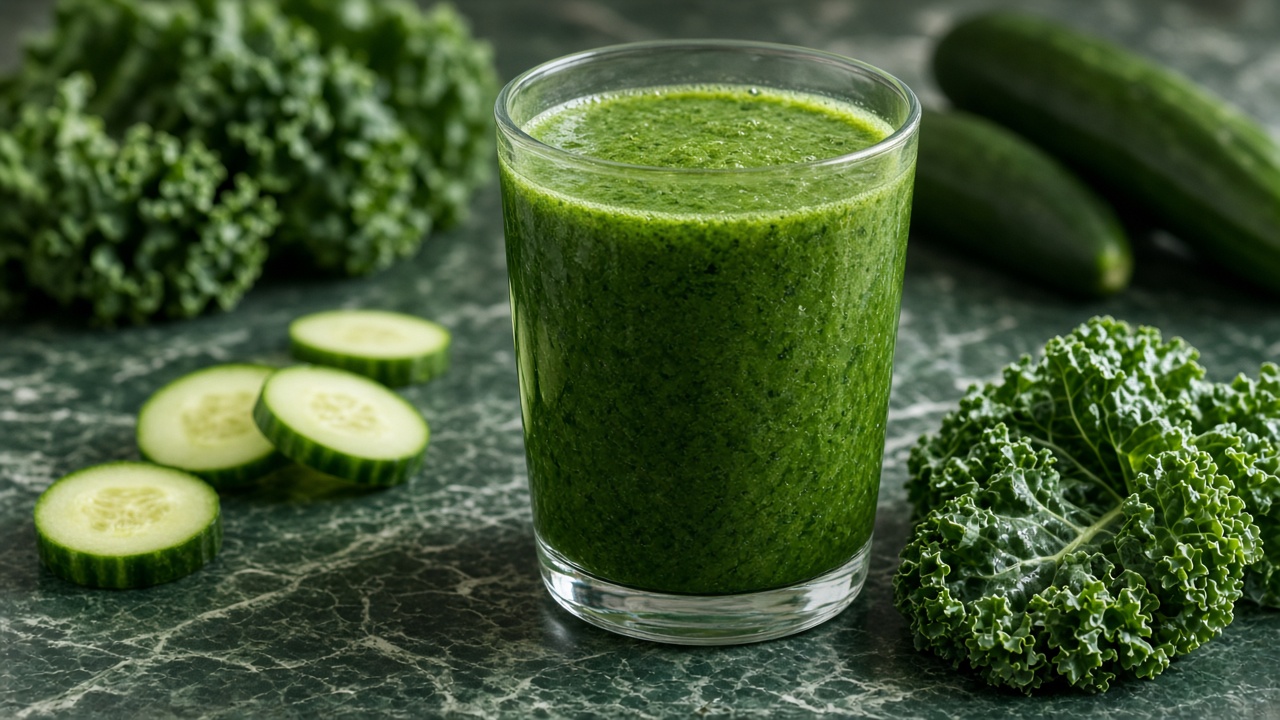
Green Cucumber Blend
A low-calorie green drink with the grams written out. The leaves carry vitamin K. The apple carries most of the carbohydrate.
Ingredients on the card
- 1 cup Chopped kale, stems removed
- 1/2 Cucumber
- 1/2 Green apple
- 1 tbsp Lemon juice
- 1/2 inch Fresh ginger
- 3/4 cup Water
Blend order
- Add water, lemon juice, and ginger.
- Add kale, cucumber, and apple.
- Blend longer than a fruit smoothie so the kale is fully broken down.
- Strain only if you prefer a thinner drink.
The jar is chopped kale, cucumber, green apple, lemon juice, fresh ginger, and water. Older links sometimes describe this style of drink with sweeping promises. This page describes weights, vitamin K, a small calorie total, and how to wash a cucumber. It does not describe a cleanse. Your liver and kidneys do not need a special green liquid to do their jobs, and nothing in the USDA tables says otherwise.
Kale, one cup, 21 grams
FDC 168421: 1 cup raw kale weighs 21 grams. Per 100 grams, kale is 35 kilocalories, 4.1 grams of fiber, 254 milligrams of calcium, 93.4 milligrams of vitamin C, and 389.6 micrograms of vitamin K. The cup is about 7 kilocalories, 0.9 grams of fiber, 53 milligrams of calcium, 20 milligrams of vitamin C, and 82 micrograms of vitamin K.
Eighty-two micrograms of vitamin K is about 68% of the FDA 120-microgram Daily Value, which counts as high on the FDA's 20% guide. People who take warfarin should keep vitamin K steady and should talk with the prescriber before a daily kale drink. The NIH vitamin K fact sheet is the source for that interaction, including the warning that a sudden rise or drop in vitamin K intake can be dangerous on warfarin.
NIDDK lists kale among cruciferous vegetables that some people connect with gas. If you are new to raw kale, this cup is a reasonable test. A packed blender full of kale is not "one cup." Weigh 21 grams the first time so you know what the recipe means.
Cucumber with the peel
FDC 168409, cucumber with peel, raw: 15 kilocalories, 0.65 grams of protein, 3.63 grams of carbohydrate, 0.5 grams of fiber, 2.8 milligrams of vitamin C, 16.4 micrograms of vitamin K, and 147 milligrams of potassium per 100 grams. One cup of slices is 52 grams: about 8 kilocalories, 1.9 grams of carbohydrate, 0.3 grams of fiber, 1.5 milligrams of vitamin C, 9 micrograms of vitamin K, and 76 milligrams of potassium.
The recipe says 1/2 cucumber. The USDA cucumber (8-1/4 inches) is 301 grams, so half is about 150 grams if your cucumber matches that size. One hundred fifty grams is about 23 kilocalories, 5.4 grams of carbohydrate, 0.8 grams of fiber, and 221 milligrams of potassium. A cup of slices and half of a large cucumber are not the same portion. The drink's character is still "mostly water" either way. Use the half you cut, and if you need a number, weigh it.
Scrub the peel with a clean produce brush under running water. The FDA names cucumbers specifically for that scrub. Do not peel first and then ignore the rind you already touched with the knife. Soap is not for cucumbers. Dry with a clean towel. Refrigerate cut cucumber at 40°F.
Green apple
FDC 171688, apples, raw, with skin: a medium apple (3-inch diameter) is 182 grams. Half is 91 grams. Per 100 grams the apple is 52 kilocalories, 13.81 grams of carbohydrate, 2.4 grams of fiber, 10.39 grams of sugars, and 4.6 milligrams of vitamin C. Ninety-one grams is about 47 kilocalories, 12.6 grams of carbohydrate, 2.2 grams of fiber, 9.5 grams of sugars, and 4 milligrams of vitamin C.
The apple is the carbohydrate in this jar. Kale and cucumber do not come close. If you add a whole medium apple instead of half, double the apple line: about 95 kilocalories and 25 grams of carbohydrate. Wash the skin. You are blending it, not peeling it, so whatever was on the skin is in the drink. Running water, no soap.
NIDDK names apples among fruits that can contribute to gas for some people. If this drink bothers you and a spinach-mango drink does not, the apple is a reasonable thing to remove while you pay attention. That is a diary note, not a verdict.
Lemon juice and ginger
Fifteen grams of lemon juice, about a tablespoon, from FDC 167747: about 3 kilocalories, 1 gram of carbohydrate, and 6 milligrams of vitamin C (38.7 milligrams per 100 grams). The recipe says 1 tablespoon. Weigh it if your pour tends to become a quarter cup. A quarter cup of lemon juice is closer to 60 grams and about 4 grams of carbohydrate, still small next to the apple, and sour enough to make the drink harsh.
Ginger, FDC 169231, teaspoon of 2 grams: about 2 kilocalories. The recipe says 1/2 inch. A half-inch piece can weigh more or less than 2 grams depending on the thickness of the root. Grate it and use 2 grams if you want the documented teaspoon. More ginger makes a hotter drink. It does not add meaningful energy.
Wash the lemon and the ginger root under running water before you cut them.
A total for the documented half-apple version
Using 21 grams kale, 150 grams cucumber, 91 grams apple, 15 grams lemon juice, 2 grams ginger, and 180 grams water (the recipe's 3/4 cup, taken as 180 milliliters of water, essentially 0 kilocalories):
- Calories: about 7 + 23 + 47 + 3 + 2 = 82
- Carbohydrate: about 0.9 + 5.4 + 12.6 + 1 + 0.4 = 20 grams
- Fiber: about 0.9 + 0.8 + 2.2 + 0 = 4 grams
- Vitamin K: about 82 micrograms from kale plus about 25 from the cucumber half (16.4 per 100 grams times 1.50) = roughly 107 micrograms
- Vitamin C: about 20 + 4 + 4 + 6 = 34 milligrams
Eighty-two kilocalories. Twenty grams of carbohydrate, about 7% of the 275-gram Daily Value. Fiber about 4 grams, well under 28. Vitamin C about 34 milligrams, under the NIH adult amounts of 75 and 90, so this is not the strawberry cup and not the pineapple cup. Vitamin K near 107 micrograms is the number a warfarin plan would notice.
Water at 180 grams changes texture, not the nutrient lines. If the kale stays in threads, blend longer before you add more fruit. More apple will hide the leaf and raise carbohydrate. That trade should be visible in your notes.
What this drink will not do
It will not erase a week of meals. It will not stand in for medicine. It will not supply much protein (kale's cup is under 1 gram of protein; the other ingredients are similarly low). Drink it because you like cold, sharp, green food, or skip it. If you need calories, the high-calorie article is the opposite design. If you need protein, use yogurt or tofu and accept a different flavor.
Pain, vomiting, or a sudden change in how you feel after a new diet pattern is a reason to call a clinician, not a reason to add a second green drink.
Handling leftovers
Blend and drink the same day. Cut apple and cucumber sit in the refrigerator at 40°F if you prepped them the night before, not for the whole week. Freeze kale only if you dried it first. FoodSafety.gov's 0°F guidance is the freezer target. A watery green drink left on a desk until afternoon should be poured out.
Sources for the cucumber blend
- USDA FoodData Central FDC 168421 (kale, cup 21 grams), FDC 168409 (cucumber with peel, cup of slices 52 grams, whole cucumber 301 grams), FDC 171688 (apple with skin, medium 182 grams), FDC 167747 (lemon juice), FDC 169231 (ginger, teaspoon 2 grams).
- NIH vitamin K consumer fact sheet, warfarin interaction. NIH vitamin C consumer fact sheet, adult amounts.
- U.S. FDA Daily Values for vitamin K, vitamin C context via NIH, total carbohydrate, and fiber.
- NIDDK gas page, kale and apples.
- U.S. FDA, "Selecting and Serving Produce Safely," including the cucumber brush.
- FoodSafety.gov, refrigerator and freezer temperatures.