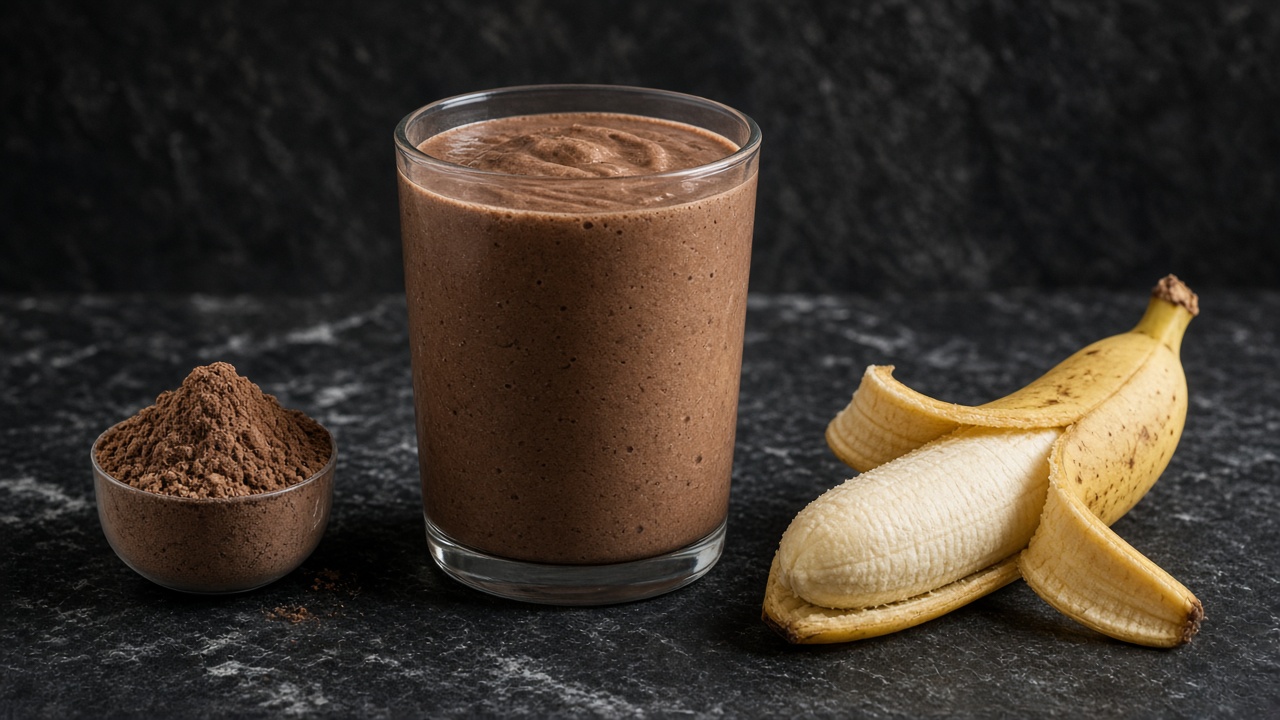
Post-Workout Protein Blast
The banana and peanut butter are in USDA tables. The protein powder is only as trustworthy as its Supplement Facts panel.
Ingredients on the card
- 1 medium Ripe banana
- 1 scoop Plain or vanilla protein powder
- 1 cup Unsweetened almond milk
- 1 tbsp Peanut butter
Blend order
- Add almond milk, then banana, protein powder, and peanut butter.
- Blend until no powder streaks remain.
- Drink soon after blending so the texture stays smooth.
Post-Workout Protein Blast is a banana, a scoop of protein powder, a cup of unsweetened almond milk, and a tablespoon of peanut butter. Three of those ingredients can be tied to USDA FoodData Central. The powder cannot. That split is the whole article. After you train, you can drink something with known grams, and you can also stir in a supplement whose grams are a printed claim. Keep those facts in separate columns.
Banana
A large banana on FDC 173944 weighs 136 grams and brings about 121 kilocalories, 1.5 grams of protein, 31 grams of carbohydrate, 3.5 grams of fiber, and 487 milligrams of potassium. The recipe says one medium banana. Weigh yours. If it is 110 grams, carbohydrate is about 25 grams (22.84 per 100 grams), not 31. Potassium scales the same way. People who were told to limit potassium should use the scale, not the word "medium."
The banana is most of the carbohydrate in the non-powder part of this drink. It is almost none of the protein. Calling the drink a protein blast because it contains a banana is a naming error.
Peanut butter
FDC 172470 lists a tablespoon of smooth peanut butter without salt at 32 grams: about 191 kilocalories, 7.1 grams of protein, 7.1 grams of carbohydrate, and 16 grams of fat. Home tablespoons are often closer to 16 grams. If you level a smaller spoon, you might be at half the calories and half the protein. Weigh the spoon the recipe intends. Sixteen grams of fat is a slow, rich addition right after a hard workout, when some people would rather drink something thinner. You can move the peanut butter to a later snack and keep the drink to banana plus milk. That is a smaller recipe, and it is allowed.
Peanut allergy is an absolute skip. Tree-nut butters are not silent substitutes. They are different allergens and different nutrition panels.
Almond milk
Unsweetened shelf-stable almond milk, FDC 174832, cup of 262 grams: about 39 kilocalories, 1 gram of protein, and 3.4 grams of carbohydrate. This is a low-protein liquid. It will not rescue a missing scoop. If you use 2% dairy milk instead, a 244-gram cup (FDC 171267) is about 122 kilocalories and 8 grams of protein. That swap adds about 7 grams of protein and about 8 grams of carbohydrate relative to the almond-milk cup, and it adds an allergen. Dairy also shows up on the NIDDK list of foods that can increase gas for some people. Choose with both facts in view.
Calcium on the almond-milk entry is high because the analyzed product is the sort of beverage that is often fortified (about 482 milligrams in the cup, against a 1,300 milligram Daily Value). Your carton might match. It might not. Read it.
The powder column
A "scoop" has no USDA weight. The Supplement Facts panel states a serving size and a protein amount. Dietary supplements are not approved by the FDA before sale the way drugs are. NCCIH states that directly in its explanation of how herbal and supplement products are regulated: the manufacturer is responsible for safety and labeling, and FDA action comes later if a problem surfaces. Independent tests over the years have found powders that do not match their labels. This page will not cite a specific scandal it did not re-open. It will say: keep the package, use the number on the package as a claim rather than as a laboratory result, and skip the powder if you want every gram to come from a food entry you can look up.
If the panel says 20 grams of protein per scoop, the drink's protein is about 20 plus the food protein below. If the panel says 20 and the tub actually contains 12, your log is wrong and you will not know from taste. That uncertainty is the cost of the scoop.
Added sugars and non-sugar sweeteners also hide in flavored powders. Sweeteners ending in "-ol" are on the NIDDK gas list. A vanilla powder that leaves you gassy may be the sweetener system, not the banana. Plain or unflavored powders still are not FDA-approved drugs. They are just easier to compare with the food column.
Food column only, then food plus a claimed scoop
Foods only, large banana + 32 grams peanut butter + 262 grams unsweetened almond milk. Calories about 121 + 191 + 39 = 351. Protein about 1.5 + 7.1 + 1 = 9.6 grams. Carbohydrate about 31 + 7 + 3.4 = 41 grams. Fat about 16 grams plus a little from the almond milk.
Nine or ten grams of protein is about 20% of the 50-gram FDA protein Daily Value. The FDA calls 20% high for a labeled serving. You are at that line before any powder, and you got there with 351 kilocalories and 41 grams of carbohydrate. That may be enough after a short session and not what you wanted after a long one. The longer post-exercise article on this site shows a yogurt glass with more protein and a different carbohydrate shape. Use that one if you would rather skip powders entirely. Greek yogurt at 170 grams is about 17.5 grams of protein without a supplement claim (FDC 330137).
Same foods plus a scoop claimed at 20 grams of protein. Protein on paper is about 30 grams, which is 60% of the Daily Value. Calories rise by whatever the panel lists, often 100 to 150 kilocalories, but that range is not a USDA figure and should be replaced by your label before you believe it. Carbohydrate rises by the scoop's carbohydrate line, which is sometimes small and sometimes a dessert. Look.
Timing
Drink it when your stomach will accept it. A 16-gram fat spoon of peanut butter immediately after a hard effort is unpleasant for some people. Waiting until the next meal and eating yogurt then is a legitimate choice. There is no minute mark on this page that you must hit. There is also no prize for forcing nausea.
Fluid still matters. This drink is one cup of milk plus the water in the banana. It is not a full plan for a long run in heat. If you are dizzy, confused, or cramping in a way that scares you, get medical help. Do not add another scoop and hope.
Allergens in one glance
Banana is uncommon as an allergy and still real for some people. Peanut is common and dangerous. Milk appears if you swap in dairy. Soy appears in many powders even when the front of the tub says chocolate. Read the "contains" line every time you buy a new brand. A recipe title is not an allergen screen.
Prep
Freeze peeled bananas in a bag if mornings are rushed. Add peanut butter from a small container, not from a frozen smear you cannot empty. Almond milk stays in the refrigerator. Blend liquid first so the powder does not stick to the lid in a dry paste. Undissolved powder is not extra protein you somehow absorbed. It is powder you left on the counter when you rinsed the lid. Scrape it back in or accept that the scoop is short.
Wash your hands. The banana peel should be rinsed before you open it if you want to follow the FDA produce page strictly, because the peel touches the knife and your fingers. No soap on the peel.
Sources for the protein blast
- USDA FoodData Central FDC 173944, FDC 172470, FDC 174832, FDC 171267, FDC 330137.
- U.S. FDA Daily Values for protein (50 grams), calcium (1,300 milligrams), and potassium (4,700 milligrams).
- NCCIH explanation that dietary supplements are not approved by the FDA before they are sold.
- NIDDK, gas symptoms, dairy, and sweeteners ending in "-ol."
- U.S. FDA, "Selecting and Serving Produce Safely."