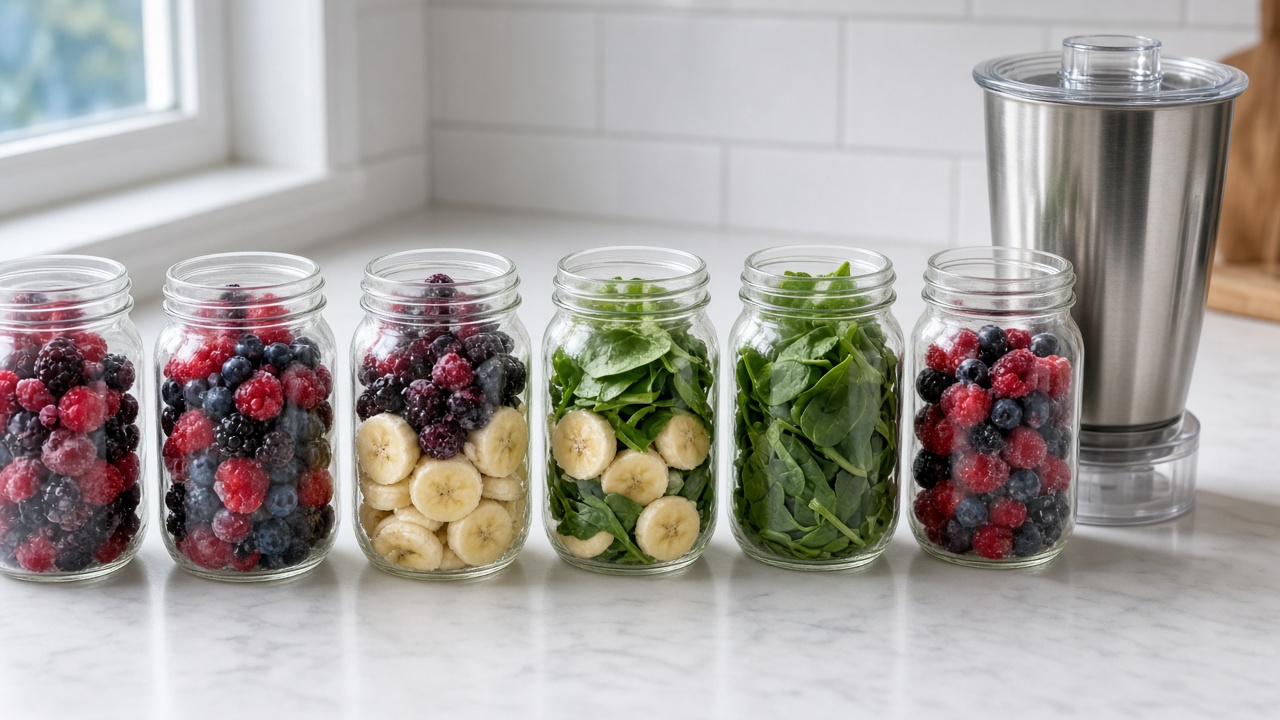
Smoothie Meal Prep: A Practical Weekly System
Smoothies are supposed to be fast, yet on a busy morning even five minutes of washing, peeling and measuring can be enough to skip one. Meal prep fixes that. With an hour on the weekend, you can set up a week of smoothies that take about a minute to blend.
This guide covers two approaches (freezer packs and pre-blended batches), how to plan a week, which ingredients hold up, and how to store everything so it stays safe and tastes good.
Two ways to prep
Freezer packs are bags or containers holding all the solid ingredients for one smoothie: fruit, greens, seeds and so on. In the morning you tip a pack into the blender, add liquid and blend. This is the most flexible approach and keeps the best texture and flavor.
Pre-blended batches are smoothies you blend in advance and store in the fridge or freezer. They're fastest to grab, but texture and color change over time, so they suit people who value speed above all.
Most people find freezer packs the better default and use pre-blended smoothies for the first day or two of the week.
Step 1: Plan a simple rotation
Decision fatigue kills meal prep. Choose two or three recipes for the week rather than seven different ones. A simple pattern:
- One fruit-forward smoothie, such as berries, banana and yogurt.
- One green smoothie, such as spinach, pineapple, mango and lime.
- One heartier option with oats, nut butter or extra protein for longer mornings.
Write a short shopping list with quantities multiplied by the number of servings. Our recipe collection is a good place to choose your rotation.
Step 2: Shop with freezing in mind
Frozen fruit is a meal prepper's friend. It's picked and frozen in season, it's already washed and chopped, and it gives smoothies a thick, cold texture without ice. The USDA's MyPlate guidance counts frozen fruits and vegetables as a convenient way to meet daily fruit and vegetable goals, and frozen options without added sugar are widely available.
Good candidates for buying fresh and freezing yourself:
- Bananas. Peel, slice and freeze ripe bananas; they add creaminess and natural sweetness.
- Spinach and kale. Both freeze well for smoothies, though they'll be limp when thawed (which doesn't matter once blended).
- Avocado. Freeze in chunks for a creamy, mild base.
- Ginger. Freeze whole; grate it frozen, no peeling needed.
- Herbs like mint. Freeze leaves flat in a bag.
Ingredients that don't freeze as well in packs: yogurt (texture can turn grainy), milk and other liquids (add them fresh), and very watery produce like cucumber, which can become mushy and icy. Add those fresh at blending time.
Step 3: Assemble freezer packs
Set up an assembly line on the counter:
- Lay out labeled bags or reusable containers, one per smoothie.
- Add greens first so they sit at the bottom of the bag. When you tip the pack into the blender upside down, greens end up nearer the top, which some blenders handle better; if yours prefers greens at the bottom, flip the order.
- Add fruit, then extras like oats, seeds, nut butter frozen in small spoonfuls, cocoa or spices.
- Press out as much air as possible to reduce freezer burn.
- Label each pack with the recipe name, the liquid to add and the date.
Lay bags flat to freeze so they stack neatly and break apart easily.
Step 4: Decide how long things keep
For quality, most frozen fruit and vegetable packs are best used within a few months; for a weekly system you'll be using them within days, which is ideal.
For pre-blended smoothies, food safety rules for perishable foods apply. FoodSafety.gov advises refrigerating perishable food within two hours, or within one hour if it's in temperatures above 90°F. Smoothies made with milk, yogurt or other dairy should be kept cold and treated like any other perishable leftover. Many people find blended smoothies taste best within about 24 hours; after that, separation and color changes become more noticeable.
To freeze blended smoothies, pour them into jars or containers with headspace for expansion, freeze, then thaw overnight in the fridge and shake or re-blend briefly before drinking.
Step 5: Make mornings effortless
Keep the system as low-friction as possible:
- Store packs at the front of the freezer so you see them.
- Keep your liquid of choice (milk, plant milk, water, juice, kefir) in a consistent spot in the fridge.
- Leave the blender on the counter if space allows.
- Rinse the blender immediately after use with warm water and a drop of soap; blending that mix for 30 seconds cleans most jars.
If your blender struggles with very cold packs, let a pack sit on the counter for five to ten minutes while you get ready, or add a little more liquid.
Troubleshooting
Smoothie is too thick. Add liquid a splash at a time. Frozen packs need more liquid than fresh fruit.
Smoothie is too thin. Add a few frozen fruit chunks, a spoonful of oats or chia seeds, or a few ice cubes.
Greens leave flecks. Blend greens with the liquid first, then add the rest of the pack.
Pre-blended smoothie separates. Shake well. Adding a small amount of banana, avocado, oats or chia can help keep blends more stable.
Packs freeze into a solid block. Freeze ingredients on a tray first, then bag them, or massage the bag a few times in the first hour of freezing.
A sample prep session
Here's what an hour might look like for five weekday smoothies:
- 10 minutes: wash and chop fresh fruit, peel and slice bananas.
- 15 minutes: assemble five labeled packs (two berry-banana, two green pineapple, one oat and peanut butter).
- 5 minutes: press out air, lay flat in the freezer.
- 10 minutes: blend one smoothie for tomorrow and refrigerate it.
- 5 minutes: clean up.
That's a week of breakfasts or snacks handled before Monday starts.
Keep exploring
If you want the most convenient version of this, see our guide to overnight smoothie packs. If cost is the main concern, our smoothie budget meal plan shows how to prep for less, and if you're still choosing equipment, start with how to choose a blender for smoothies.
*This guide is general information about food preparation, not personal nutrition advice. If you have a medical condition or dietary restrictions, check with a qualified professional about what's right for you.*
Free PDF
Free recipe notes: 8 fruit smoothies
A short sampler of fruit smoothie recipes, plus kitchen notes on thickness, greens and prep.
You'll also get occasional recipe emails. Unsubscribe any time. Privacy Policy.